Review: Too Tall for This Giraffe PNG
As a designer who spends more time staring at stitch simulations than actual fabric, I have learned to be skeptical of digital assets that promise "easy wins." We all know the drill: a graphic looks fantastic on a white screen but turns into a tangled mess of thread breaks and puckering once it hits the hoop. That is why I approached the Too Tall for This Giraffe PNG with a critical eye, looking past the initial charm to see if it holds up under the needle.
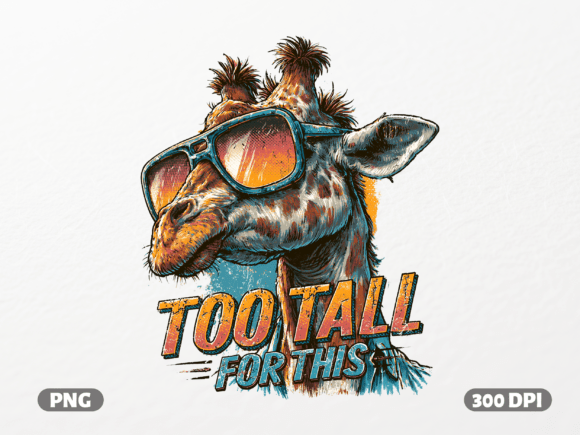
The first impression is undeniably charming. The concept—a stylish giraffe sporting retro sunglasses with a trendy distressed texture—hits a sweet spot between whimsical and cool. It avoids the overly childish aesthetic that plagues so many animal-themed graphics, making it versatile enough for adult apparel as well as kids' items. However, as embroidery professionals, we know that "distressed" is a double-edged sword. In digital printing, distress adds character. In embroidery, it can mean fragmented satin stitches, excessive jump stitches, or areas that simply do not cover the fabric well. My goal in this review is to determine whether this design translates from a flat graphic into a durable, high-quality stitched product.
Visual Appeal and Design Personality
The mood of the Too Tall for This Giraffe PNG is relaxed and confident. The giraffe’s posture and the addition of sunglasses give it a personality that feels modern rather than dated. For an Etsy seller or small shop product creator, this is crucial. Customers are drawn to designs that feel like they have a voice. This graphic does not just say "giraffe"; it says "cool giraffe." That subtle distinction can elevate a basic handmade product into something that feels curated and intentional.
The layout is generally balanced, which is a good sign for hoop stability. However, the distressed texture requires careful scrutiny. When converting this type of graphic into a machine embroidery design, the software must decide how to handle those broken edges. If the digitizer has used too many short running stitch segments to mimic the distress, the design may look sparse on textured fabrics. Conversely, if they have filled those areas with dense fill stitch work, it could create stiffness. A successful execution relies on balancing visual texture with structural integrity.
Real-World Application: The Tote Bag Test
To truly evaluate this asset, I imagined applying it to a common craft business staple: a canvas tote bag. Canvas is forgiving, but it has a distinct weave. I visualized the giraffe centered on the bag, using a medium-weight cut-away stabilizer to prevent pull-out. The long neck of the giraffe presents a vertical challenge. On a tote, this works well because you have the height. The sunglasses, being a focal point, would likely require a tight satin stitch border to ensure they pop against the natural fiber background.
I also considered this design for sweatshirt embroidery. Here, the pile of the fleece interacts differently with the threads. The distressed elements might get lost in the fuzz if the stitch density is too low. For a personalized gift like a baby onesie, the scale becomes the primary concern. You would need to resize the embroidery file significantly. At smaller sizes, the details of the sunglasses and the texture might merge, losing the definition that makes the design unique. This is where testing on scrap fabric is non-negotiable. You cannot assume a design scales linearly without checking how the small details hold up.
Navigating Technical Challenges
There are specific scenarios where you should use the Too Tall for This Giraffe PNG with caution. First, consider curved surfaces like caps. Embroidering a tall, vertical design on a curved crown can lead to distortion. The top of the giraffe’s head might sit comfortably, but the lower body could wrap awkwardly around the curve, causing registration issues. If you are creating an embroidered patch instead, this risk is mitigated, as patches are stitched flat before application.
Another critical factor is fabric choice. On thin or stretchy fabrics, the weight of the stitching can cause puckering, especially if the design has large solid areas. While the distressed look helps reduce overall density, you must still verify the stitch density in your digitizing software. Dark fabrics present another hurdle. If the design relies on light thread colors for the giraffe’s body, you must ensure adequate underlay stitching to prevent the dark fabric from showing through the gaps in the distressed texture. A lack of proper underlay can make a professional design look amateurish.
Enhancing Product Value and Brand Consistency
Using a distinctive graphic like this can significantly boost buyer engagement. In a sea of generic clipart, a character with attitude stands out. For commercial embroidery projects, consistency is key. If you are building a brand around quirky, retro-inspired animals, this design fits seamlessly. It allows you to create a cohesive collection of design assets that customers recognize. Whether it is used for holiday embroidery gifts or year-round custom apparel, the timeless nature of the "cool animal" trope ensures it does not feel seasonal or fleeting.
Furthermore, the quality of the finished stitchout reflects directly on your professional reputation. A clean, well-digitized version of this design signals attention to detail. It builds trust with clients who may be unfamiliar with the technical aspects of embroidery but know what looks "good." When they see crisp edges on the sunglasses and smooth transitions in the giraffe’s spots, they perceive higher value. This perception justifies premium pricing for your finished product.
Practical Notes for the Embroiderer
Before you commit to stitching this on a client’s garment, take these practical steps. First, always check the license terms. Ensure the digital embroidery file permits commercial use if you plan to sell the items. Next, run a simulation if your software allows it. Look for excessive jump stitches in the distressed areas, which can lead to thread nests on the back of the fabric. Trim them carefully if necessary.
Test the design on both light and dark fabrics to gauge contrast. You may need to adjust thread colors to maintain visibility. For instance, using a slightly darker shade for the outline can help define the shape on light backgrounds. Also, confirm the recommended hoop size. Trying to cram a large design into a small hoop can result in misalignment or fabric damage. Finally, consider creating a printable mockup to show clients how the design will look on their specific item before you start stitching. This manages expectations and reduces the risk of dissatisfaction.
In conclusion, the Too Tall for This Giraffe PNG offers a strong foundation for creative projects. Its success lies in the execution. By respecting the technical limitations of embroidery and understanding the nuances of fabric and stitch interaction, you can transform this graphic into a standout piece. Whether for a tote bag design, a baby embroidery project, or a boutique T-Shirt Designs collection, this giraffe has the potential to be a bestseller—if handled with care.